Tree Snapshot Analysis, Refined
We are releasing Phase 1.5 of the Passive Tree Snapshot system on Path of Codex, focused on clarity, structure, and transparency.
This update does not introduce heuristics, rankings, or optimization logic.
Instead, it answers one essential question for Path of Exile 2 players:
What does this passive tree actually do?
Phase 1.5 is about understanding effects, not judging value.
Build Identity
Every snapshot now starts with a Build Identity section.
This section uses semantic tags to describe what kind of build this passive tree represents, without implying strength or correctness.
Examples:
- Chaos Inoculation
- Energy Shield-based
- Critical Spell
- Shock-focused
These tags are descriptive, not evaluative.
They exist to help players quickly recognize build patterns across different trees.

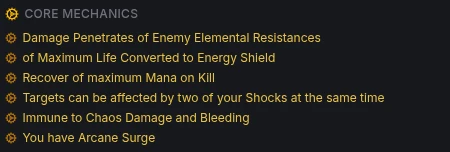
Core Mechanics
The Core Mechanics section highlights the fundamental rules that define how the build operates.
This includes mechanics such as:
- Chaos Immunity
- Energy Shield conversion
- Double Shock interactions
- Mana or resource mechanics
- Keystone-driven behavior
This section answers:
What rules does this character play by?
Core Mechanics are not about numbers — they are about constraints and behavior.
Primary Scaling
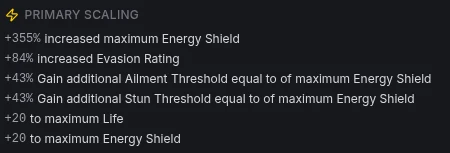
Primary Scaling represents where the passive points truly went.
These are:
- Large, structural investments
- The main scaling axes of the build
- The stats that define its core identity
Examples:
- Increased maximum Energy Shield
- Evasion Rating
- Life or Mana investment
- Threshold conversions
Primary Scaling answers:
What is this tree fundamentally scaling?
Secondary Stats
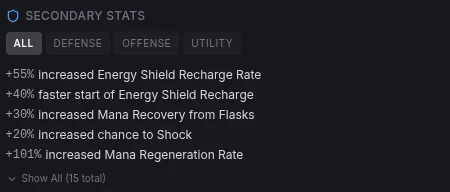
Secondary Stats are the consequences of the tree, not its focus.
They include:
- Derived modifiers
- Accumulated bonuses
- Side effects of pathing and clusters
In Phase 1.5, Secondary Stats are:
- Fully listed
- Filterable by category (Defences / Damage / Utility)
- Expandable via “Show full stat list”
Nothing is hidden.
You decide how much detail you want to see.
Trade-offs & Constraints
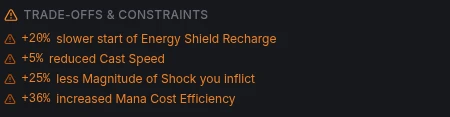
Every passive tree makes sacrifices.
Phase 1.5 introduces a dedicated section to surface these explicitly.
Examples:
- Maximum Life reduced to 1
- Armour investment near zero
- Evasion ignored
- Attribute pressure
This section does not explain or judge these choices.
It simply states the constraints implied by the tree.
Keystone Summary
All allocated keystones are now listed in a dedicated Keystone Summary section.
Keystones are treated as rule changers, not just stat bonuses.
This reinforces their role as:
- Non-negotiable build decisions
- Defining mechanics
- Structural constraints

Snapshot Footer & Public JSON Export
Each snapshot ends with a clear footer containing:
- Total node count
- Keystone count
- Jewel count
- Public JSON export
Along with an explicit disclaimer:
Snapshot analysis only. No opportunity cost applied.
Snapshots are designed as reference objects — inspectable, shareable, and transparent.

Snapshots are transparent, inspectable, and shareable.
What Phase 1.5 Is — and Is Not
Phase 1.5 *is*:
- A structural analysis of a passive tree
- A way to clearly read build intent
- A foundation for deeper analysis in future phases
Phase 1.5 *is not*:
- A DPS calculator
- A build ranking or tier list
- A Path of Building replacement
- A heuristic or optimizer
There is no scoring, no judgment, and no recommendations.
What Comes Next
Phase 1.5 prepares the ground for Phase 2: Opportunity Cost Analysis — where choices begin to be evaluated relative to alternatives.
Phase 2 will only happen once players are comfortable understanding:
- What their build does
- What it prioritizes
- What it sacrifices
Until then, Phase 1.5 stands on its own as a complete, honest snapshot system for Path of Exile 2.
Path of Codex
Understanding builds before optimizing them.
Tree Snapshot Analysis, Refined
- We are releasing Phase 1.5 of the Passive Tree Snapshot system on Path of Codex, focused on clarity, structure, and transparency.
- This update does not introduce heuristics, rankings, or optimization logic.
- Instead, it answers one essential question for Path of Exile 2 players:
What does this passive tree actually do?
- Phase 1.5 is about understanding effects, not judging value.
Build Identity
- Every snapshot now starts with a Build Identity section.
- This section uses semantic tags to describe what kind of build this passive tree represents, without implying strength or correctness.
- Examples:
- Chaos Inoculation
- Energy Shield-based
- Critical Spell
- Shock-focused
- These tags are descriptive, not evaluative.
- They exist to help players quickly recognize build patterns across different trees.

- Build Identity summarizes what the tree represents, not how good it is.
Core Mechanics
- The Core Mechanics section highlights the fundamental rules that define how the build operates.
- This includes mechanics such as:
- Chaos Immunity
- Energy Shield conversion
- Double Shock interactions
- Mana or resource mechanics
- Keystone-driven behavior
- This section answers:
What rules does this character play by?
- Core Mechanics are not about numbers — they are about constraints and behavior.

- Core Mechanics define how the build fundamentally behaves.
Primary Scaling
- Primary Scaling represents where the passive points truly went.
- These are:
- Large, structural investments
- The main scaling axes of the build
- The stats that define its core identity
- Examples:
- Increased maximum Energy Shield
- Evasion Rating
- Life or Mana investment
- Threshold conversions
- Primary Scaling answers:
What is this tree fundamentally scaling?

- Primary Scaling shows where your passive points actually went.
Secondary Stats
- Secondary Stats are the consequences of the tree, not its focus.
- They include:
- Derived modifiers
- Accumulated bonuses
- Side effects of pathing and clusters
- In Phase 1.5, Secondary Stats are:
- Fully listed
- Filterable by category (Defences / Damage / Utility)
- Expandable via “Show full stat list”
- Nothing is hidden.
- You decide how much detail you want to see.

- Secondary stats are fully transparent and user-controlled.
Trade-offs & Constraints
- Every passive tree makes sacrifices.
- Phase 1.5 introduces a dedicated section to surface these explicitly.
- Examples:
- Maximum Life reduced to 1
- Armour investment near zero
- Evasion ignored
- Attribute pressure
- This section does not explain or judge these choices.
- It simply states the constraints implied by the tree.

- Every build makes sacrifices. Phase 1.5 makes them visible.
Keystone Summary
- All allocated keystones are now listed in a dedicated Keystone Summary section.
- Keystones are treated as rule changers, not just stat bonuses.
- This reinforces their role as:
- Non-negotiable build decisions
- Defining mechanics
- Structural constraints

- Keystones define the non-negotiable rules of the build.
Snapshot Footer & Public JSON Export
- Each snapshot ends with a clear footer containing:
- Total node count
- Keystone count
- Jewel count
- Public JSON export
- Along with an explicit disclaimer:
Snapshot analysis only. No opportunity cost applied.
- Snapshots are designed as reference objects — inspectable, shareable, and transparent.

- Snapshots are transparent, inspectable, and shareable.
What Phase 1.5 Is — and Is Not
Phase 1.5 *is*:
- A structural analysis of a passive tree
- A way to clearly read build intent
- A foundation for deeper analysis in future phases
Phase 1.5 *is not*:
- A DPS calculator
- A build ranking or tier list
- A Path of Building replacement
- A heuristic or optimizer
- There is no scoring, no judgment, and no recommendations.
What Comes Next
- Phase 1.5 prepares the ground for Phase 2: Opportunity Cost Analysis — where choices begin to be evaluated relative to alternatives.
- Phase 2 will only happen once players are comfortable understanding:
- What their build does
- What it prioritizes
- What it sacrifices
- Until then, Phase 1.5 stands on its own as a complete, honest snapshot system for Path of Exile 2.
- Path of Codex
- Understanding builds before optimizing them.