
Welcome to Path of Codex.
After months of daily work, we're launching into Path of Exile 2 Season 0.5 with a full set of tools built from the ground up — designed for every type of player, from those stepping into the PoE2 universe for the first time to veterans who have lived and breathed the game for years.
Here's everything that's new.
Oracle Score
The Oracle Score gives your build a structured evaluation across four pillars:
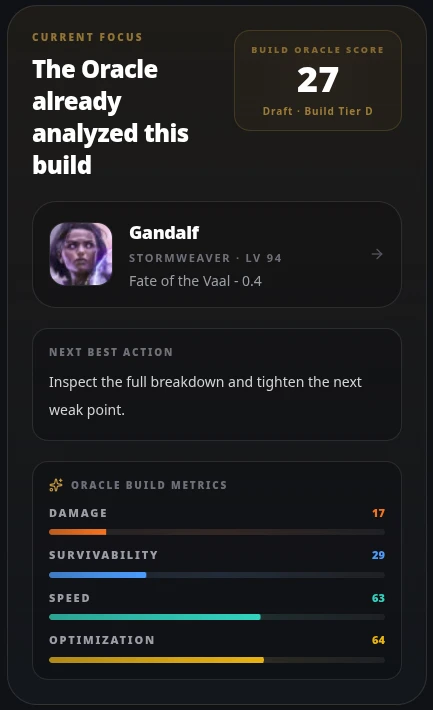
- Damage — how hard you hit
- Survivability — how long you last
- Speed — how efficiently you move and clear
- Optimization — how well the build holds together structurally
Not just a number. A readable signal that tells you where you're strong, where you're exposed, and what deserves attention first.
How your score is calculated →
Oracle Journal & Oracle Verdict
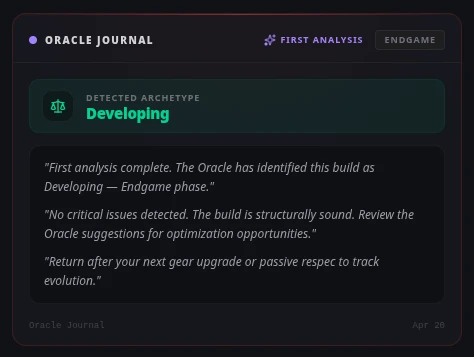
The Oracle Journal tracks your progression and surfaces the moments that actually mattered — not just what changed, but why it was significant.
The Oracle Verdict turns your build into something readable. It gives you identity, strengths, weaknesses, and a clear direction for what to fix next.
Mode Pro
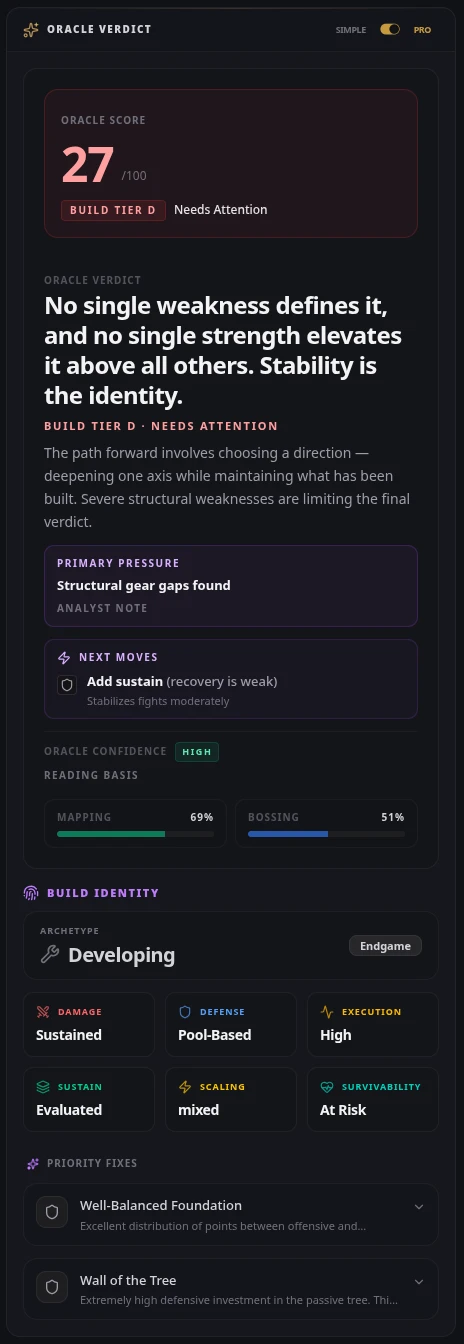
A deep structural breakdown for players who want to understand exactly what's happening under the hood — damage pillars, defensive gaps, passive efficiency, and priority fixes ranked by impact.
Mode Simple
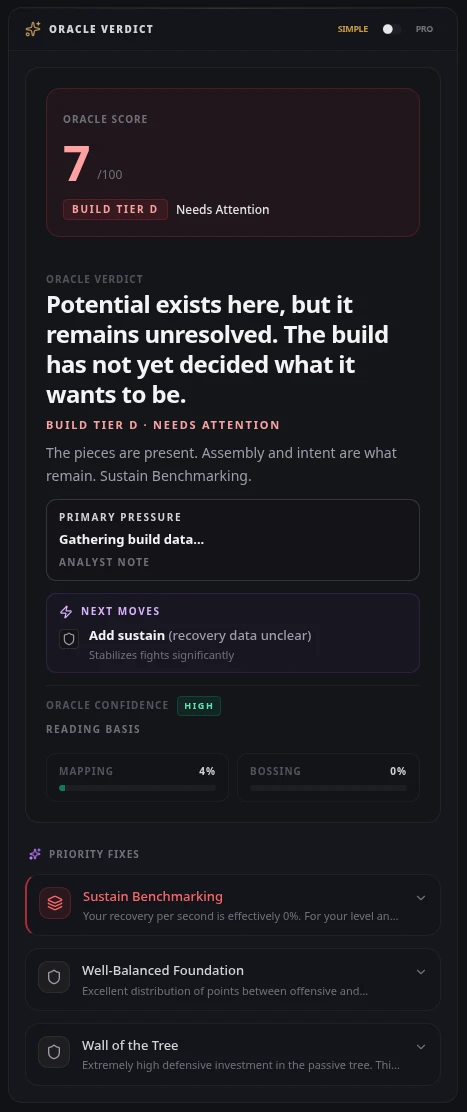
A focused, clean reading for when you need a clear signal without the noise. Same Oracle intelligence, presented without the complexity.
How the Oracle reads your build →
Build Compare
Choosing a build is one of the most expensive decisions in PoE2. A wrong call means currency, time, and frustration.
Build Compare answers that before you commit.
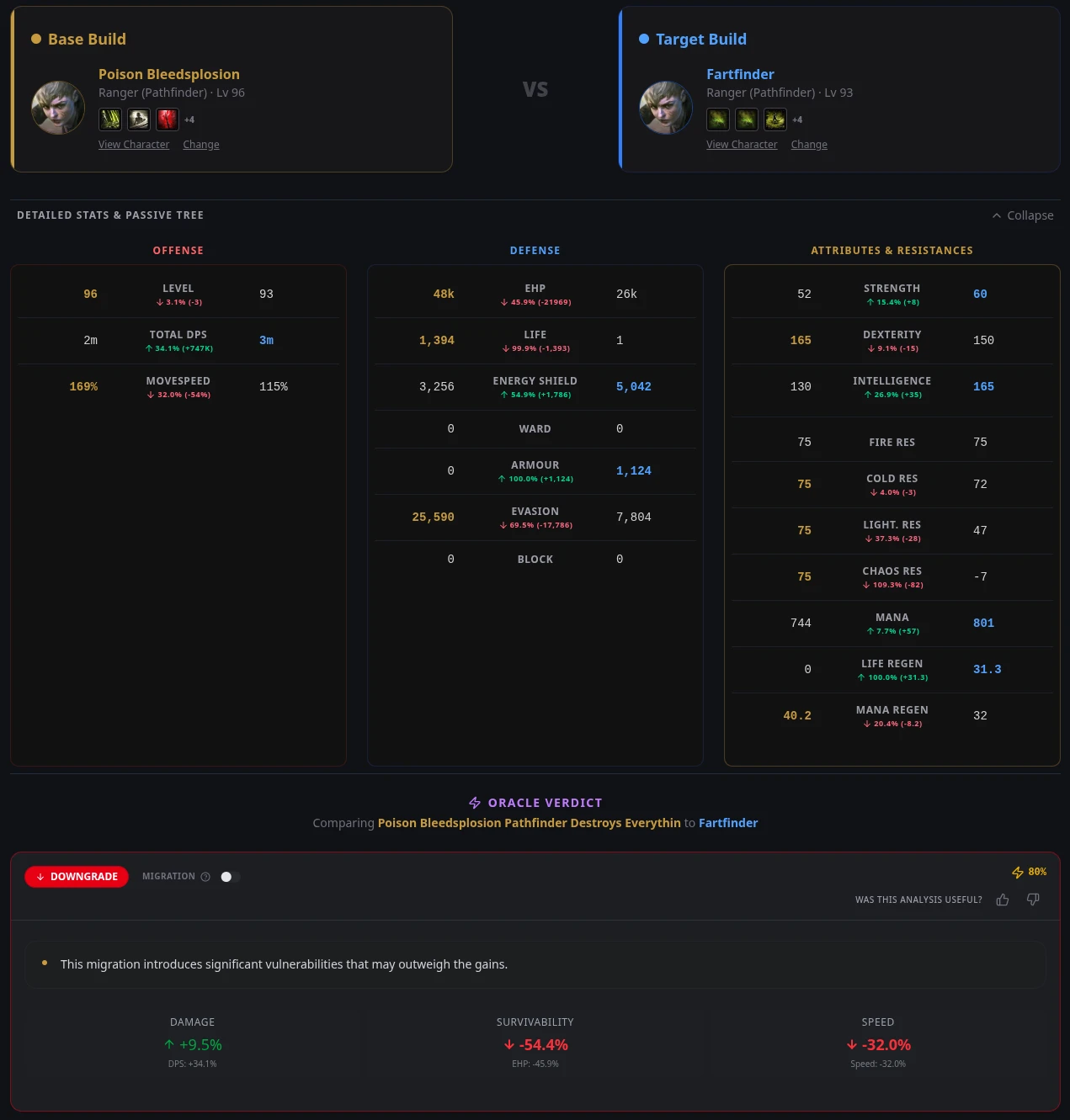
Two modes built for different moments:
- Benchmark — compare builds before you start, so you know what you're getting into
- Migration — compare your current build against a potential switch, so you know exactly what you'd gain and lose
The Oracle delivers a clear verdict: upgrade, neutral, or downgrade — and explains the reasoning behind it.
A closer look at Build Compare →
Timeline — Track Your Build Progression
Most tools only show you where you are. The Timeline shows you how you got there — and whether you're actually improving.
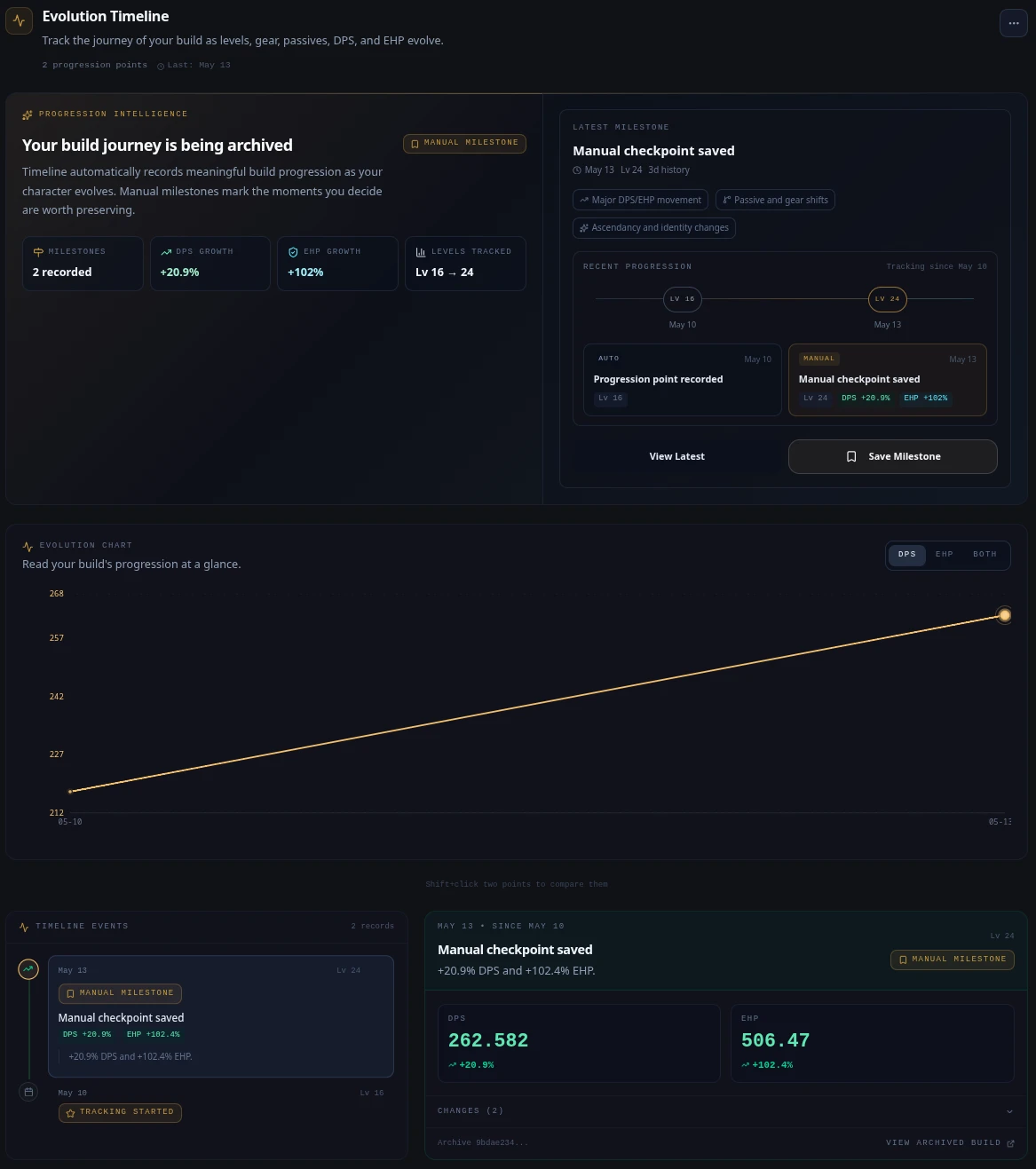
A build is not just what it is. It is what it has been becoming.
The Timeline makes progression visible — tracking the moments that defined your character:
- Level milestones
- Stat improvements
- Score changes
- Structural shifts in build direction
You stop guessing if you're moving forward. You start seeing it.
Following your build's evolution over time →
Passive Tree — Build Identity
The Passive Tree was one of the hardest challenges we faced.
Most tools show it as a list of nodes. We wanted it to be readable.
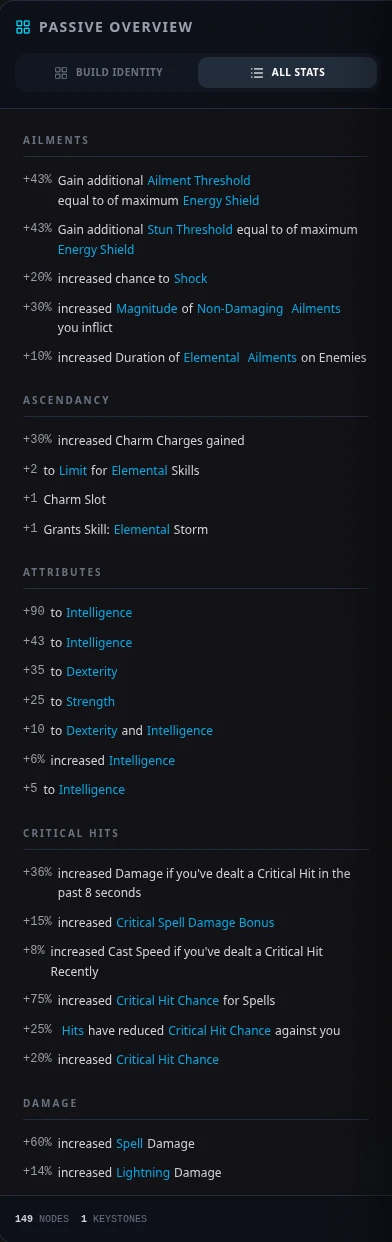
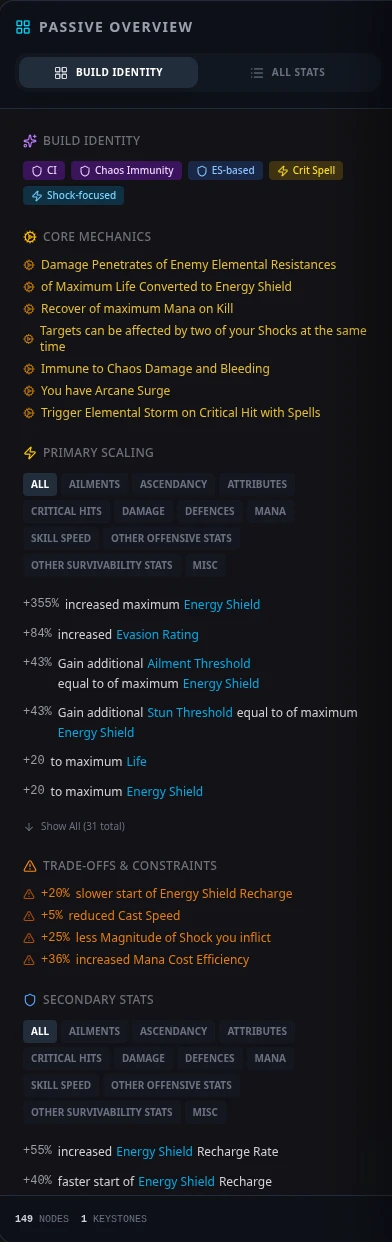
The Build Identity view extracts the essence of a character:
- Tags — what the build is
- Core Mechanics — how it works
- Trade-offs — what it sacrifices
- Scaling — what actually matters
In seconds, you understand the build — not just its numbers.
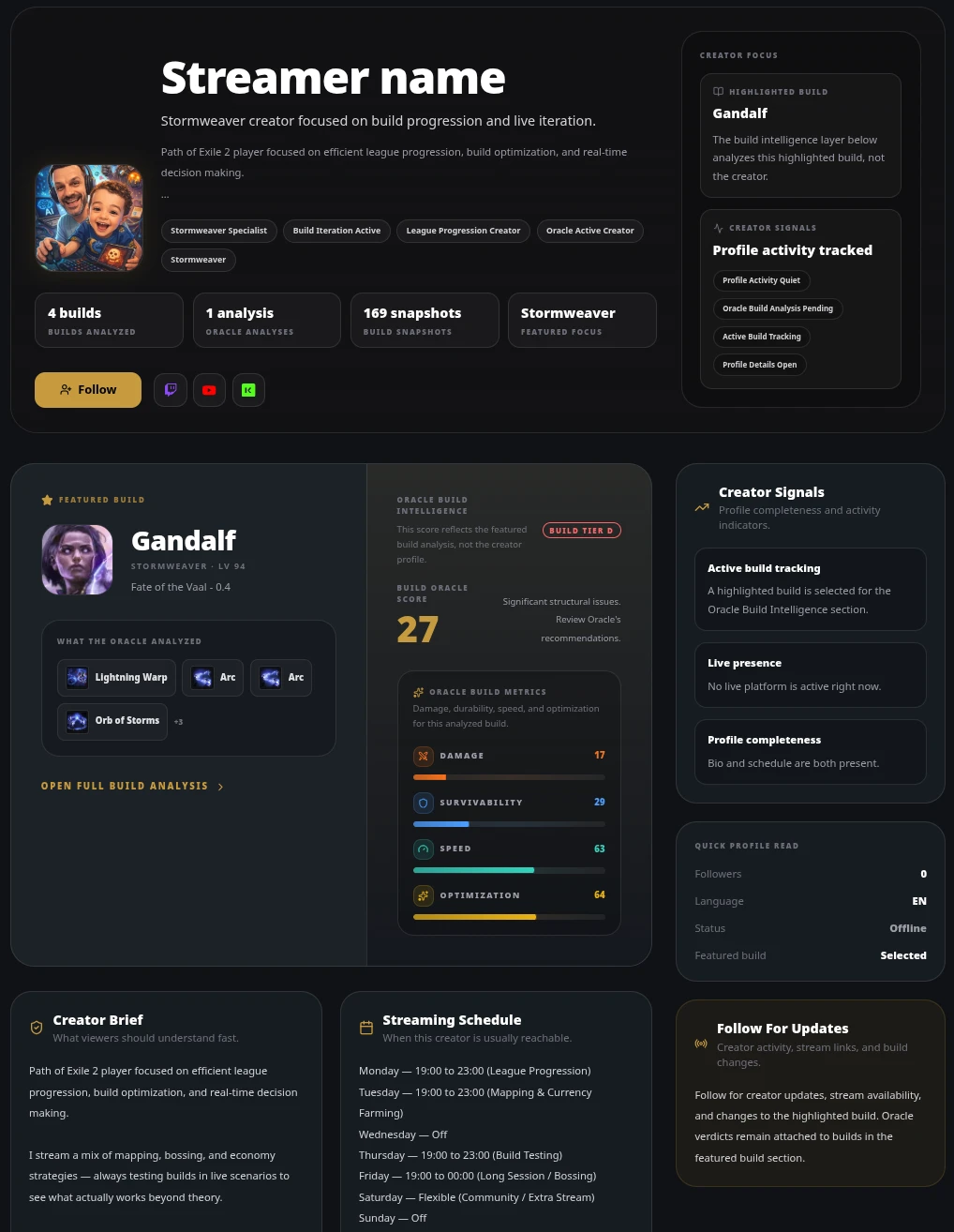
Path of Codex is not only about analysis — it is also about connection.
For creators, the Streamer Tools provide a persistent presence beyond the stream itself: public profiles, build showcases, a follower system, and live visibility so your audience always knows what you're playing and why.
For everyone else, it means you can follow the builders and players you trust — and see exactly what builds they're running, not just what they mention on stream.
Streams end. Your presence doesn't.
A closer look at the tools built for creators — article dropping May 20th →
Notification Center
Most tools only help when you remember to open them.
The Notification Center is different. Relevant signals come to you when they matter — not buried in a feed you have to check, but surfaced at the right moment across five channels:
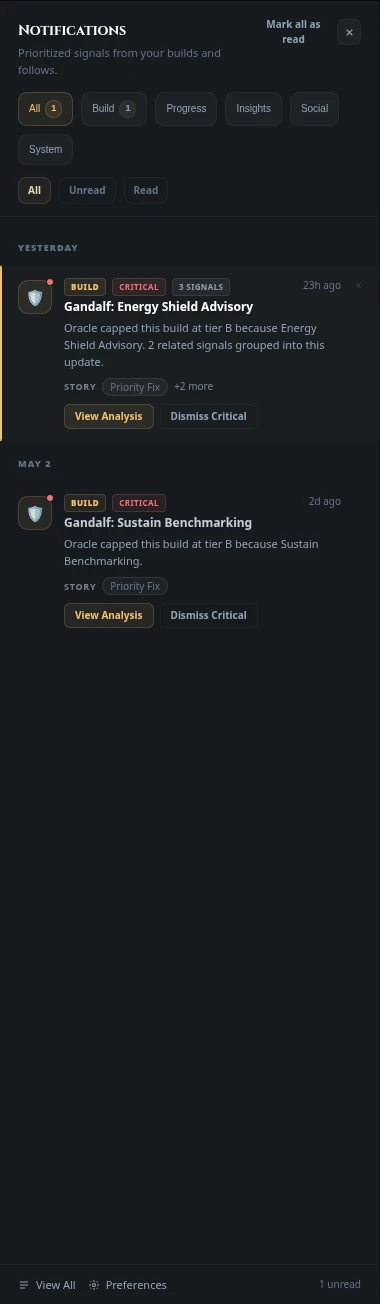
- Build — changes that affect your character directly
- Progress — milestones and meaningful improvements
- Insights — Oracle observations worth acting on
- Social — activity from builders and streamers you follow
- System — platform updates and announcements
This is not a feed. It is a decision layer.
How signals reach you when they matter — article dropping May 22th →
Oracle Item Advisor — Upgrade Advisor & Trade Match
Finding an item is easy. Knowing if it actually improves your build is not.
The Oracle Item Advisor analyzes items in the context of your character — not in isolation. It compares against what you already use and surfaces not only potential gains, but also the hidden risks that raw stat comparisons miss.
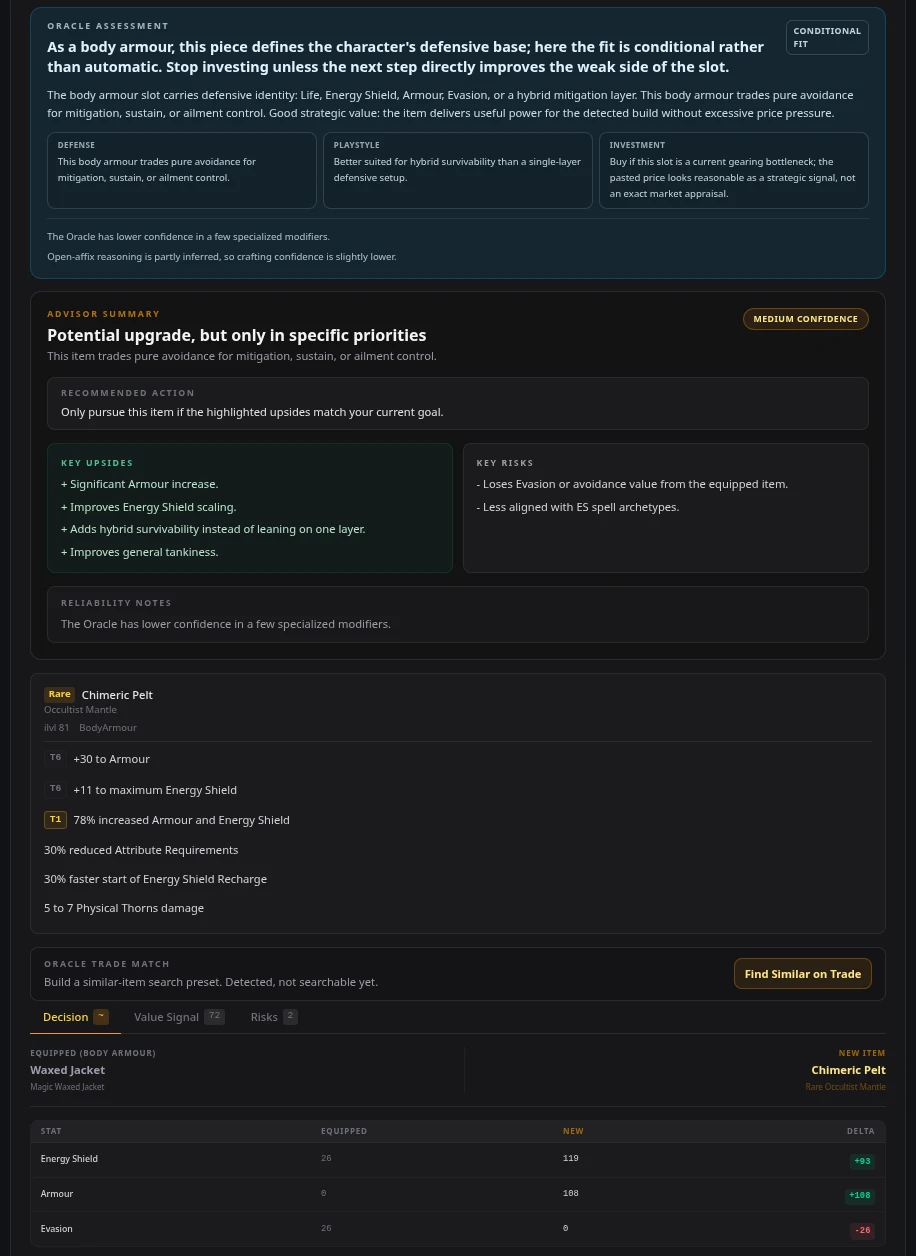
- Upgrade Advisor — should you equip it or buy it?
- Craft Advisor — is it worth continuing to invest?
Less guesswork. More clarity before spending currency.
How the Advisor evaluates your items — article dropping May 24rd →
Builds — Understanding What Actually Works
Most build pages show what people play. We want to show what actually works.
The Builds page combines real data with Oracle analysis to surface builds based on performance, structure, and efficiency — not just popularity. If a build is topping the charts but has fundamental structural issues, the Oracle will say so.
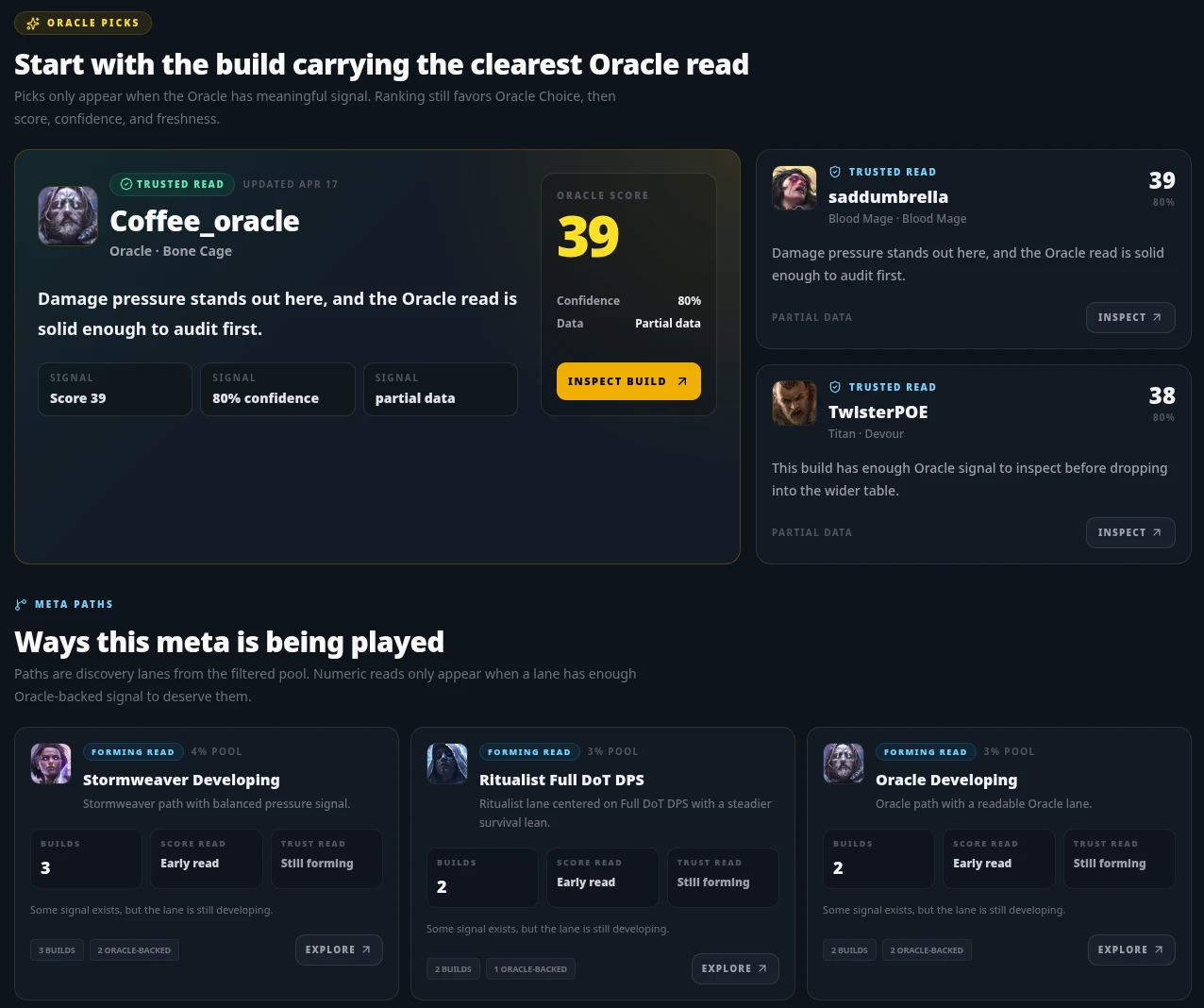
Explore Builds →
Understanding what actually works — article dropping May 26th →
What's Next
This is just the beginning.
We will keep building — always starting from real problems that deserve better solutions.
Thank you for being part of this.